Guide
Finnish Seasons: Midnight Sun and Polar Night Explained
A general guide to the Finnish year: how light changes, what the midnight sun and polar night mean, and how each season shapes travel and clothing.
Key takeaways
- The Finnish year is defined by light as much as temperature: the midnight sun in summer and the polar night, kaamos, in winter.
- According to finland.fi the polar night lasts almost two months in Utsjoki and four days in Sodankylä, and does not occur in the south.
- Helsinki's shortest day is still under six hours, and a blue twilight often appears around midday in the north.
- South of the Arctic Circle there is no true midnight sun, but white nights keep the sky from becoming fully dark.
- Dress in layers, cover exposed skin in the cold, and never walk on ice unless local authorities or operators confirm it is safe.
How strong are the Finnish seasons?
Finland lies far to the north, and its seasons are stronger than in most of Europe. The difference between a summer evening and a winter afternoon is not only about temperature but about light. In the south, summer nights are short and pale, and winter days are brief. In the far north, the contrast becomes more extreme, with long periods when the sun does not set or does not rise above the horizon. Understanding this rhythm will help you pack, plan and choose when to visit.
Finns often speak of four seasons, but many also recognise in-between periods, such as the dark, muddy time of late autumn and the bright, icy time of late winter. Each season has its own pleasures and its own limitations, and none is simply better than the rest. The best choice depends on what you want to do.
Why does the light change so much?
The Earth is tilted on its axis, so as it orbits the sun, high latitudes receive very different amounts of daylight through the year. The closer you are to the pole, the more extreme the difference becomes. This is the reason behind the midnight sun and the polar night, and it also explains why even southern Finland has long, pale summer evenings and short winter days.
The midnight sun
The midnight sun is the period in summer when the sun remains above the horizon at midnight. North of the Arctic Circle this can last for a stretch of days or even weeks, and the further north you go, the longer the stretch. South of the Arctic Circle you do not get a true midnight sun, but you do get so-called white nights, when the sky never becomes fully dark. It is a remarkable experience, but it can also disturb sleep, so a sleep mask or thick curtains are useful.
The polar night
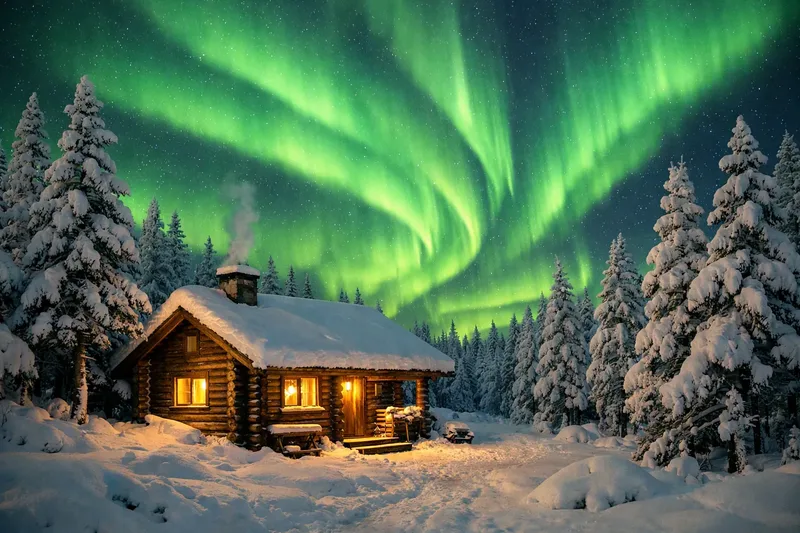
The polar night, known in Finnish as kaamos, is the opposite. In winter, in the far north, the sun may stay below or barely at the horizon for a period. This does not mean the sky is black for the whole time. A soft blue twilight often appears around midday, and snow reflects what light there is, so the landscape can feel luminous. Still, the days are short, and some people find this period tiring. Many visitors find the quiet mood beautiful, particularly when combined with clear skies and snow.
The exact dates and durations vary by latitude and year, so for any specific place use a trusted astronomical source rather than relying on general statements.
Winter light at three latitudes
| Place | What happens in midwinter | Source |
|---|---|---|
| Utsjoki (far north) | The polar night lasts almost two months | finland.fi |
| Sodankylä (north) | The polar night lasts four days | finland.fi |
| Helsinki (south) | No polar night; the shortest day is under six hours | finland.fi |
Spring
Spring arrives gradually. Days lengthen quickly, snow melts, and rivers fill with meltwater. In the south, spring can come relatively early, while the north may keep snow for a long time. Late winter, with bright sun on snow, is a favourite time for skiing in the north, while the thaw period can be awkward for trails, with mud, slush and thin ice. Take extra care around lakes and rivers during the thaw, because ice becomes unreliable. Follow local official guidance and warnings.
Summer
Summer is the season of long days, swimming, boating, cycling, outdoor dining and festivals. Many seasonal services operate only during this period, including island ferries, summer cafes and some attractions, so it is the easiest time for a wide-ranging trip. The weather is changeable. Warm spells occur, but cool and rainy days are also normal, so pack a light waterproof layer and a warm sweater even for a summer visit.
Biting insects, especially mosquitoes, can be bothersome in forests and near water, particularly in the north. Repellent and light long sleeves are sensible. Accommodation near popular destinations may be busy, so booking ahead is wise.
Autumn
Autumn begins with fresh air and berry and mushroom picking, and in the north it brings intense colour in the fells, a spectacle known as ruska. Nights lengthen quickly, which can open the door to aurora viewing in northern areas, although sightings are never guaranteed and depend on clear skies and solar activity. Late autumn can be dark and damp, with fewer services and less snow to brighten the landscape, so some travellers avoid it, while others value its quiet.
Winter
Winter is long, cold and snowy, especially in the north and east. Snow cover can make the scenery bright and tranquil. Typical winter pursuits include cross-country skiing, downhill skiing, snowshoeing, ice skating, sauna and swimming in a hole in the ice by those who are accustomed to it. Winter also demands care.
- Dress in layers, with a windproof outer shell, insulated boots, warm socks, a hat and gloves or mittens.
- Cover exposed skin in strong wind or very low temperatures to reduce the risk of frostbite.
- Do not walk on ice unless local authorities or operators have confirmed it is safe.
- Allow extra travel time, since snow and ice can slow roads, trains and flights.
Cold affects batteries and equipment as well, so keep phones and cameras warm and carry a spare power source.
What clothing and gear do I need?
The principle in Finland is layering. A thin base layer next to the skin, an insulating middle layer, and a weatherproof outer layer let you adjust to changing temperatures. Wool and synthetic fabrics perform better than cotton when wet. Good footwear matters year round: sturdy waterproof shoes in summer and insulated boots with a good grip in winter.
How do I plan around the seasons?
- If you want swimming, boating and long evenings, plan for the warm months.
- If you want snow activities and a chance of the aurora, consider the cold season, accept the darkness, and prepare for the cold.
- If you want fewer crowds and scenic colour, autumn can be rewarding, especially in the north.
- If you rely on public services in remote areas, check which are open for your chosen dates.
How should I think about weather and safety?
Finnish weather can change quickly, and conditions in the north differ from those in the south. Use official forecasts, follow local guidance, and tell others your plans if you travel into remote areas. Verify entry requirements and travel advice with official sources before you go. The seasons here are not just a backdrop. They shape everyday life, from the clothes people wear to the way roads are maintained, and learning their rhythm is a good first step to enjoying the country.
Sources and further reading
- finland.fi: When the sun doesn't rise in northern Finland: says the polar night lasts almost two months in Utsjoki and four days in Sodankylä, and that Helsinki's shortest day is under six hours.
Frequently asked questions
What is the midnight sun?
It is the summer period when the sun stays above the horizon at midnight, mainly in areas north of the Arctic Circle. The further north you go, the longer the stretch lasts. Farther south the sky stays light but the sun does set, and the pale nights are called white nights. The light can disturb sleep, so bring a sleep mask.
Is the polar night completely dark?
No. The sun stays below or near the horizon, but a blue twilight often appears around midday and snow reflects light. According to finland.fi the polar night lasts almost two months in Utsjoki, four days in Sodankylä and does not occur in southern Finland. How long it lasts depends on latitude, so check a trusted astronomical source for a specific place.
Which season is best to visit?
It depends on your interests. Summer suits water activities, cycling and wide-ranging travel, winter suits snow sports, sauna and the aurora, and autumn suits colour and quiet. Each season has limitations: many summer services close in winter, and late autumn can be dark and damp. Check which services run on your dates.
Do I need special clothing in winter?
Yes. Layered clothing with a windproof outer layer, insulated boots, warm socks, a hat and mittens is the usual approach. Wool and synthetic fabrics perform better than cotton when wet. Cover exposed skin in strong wind, keep phones and cameras warm, and follow local advice on very cold days.