Guide
Lapland and the Northern Lights: A General Guide
What Finnish Lapland is, how its landscape and seasons work, and how to think realistically about the aurora without promises or guaranteed sightings.
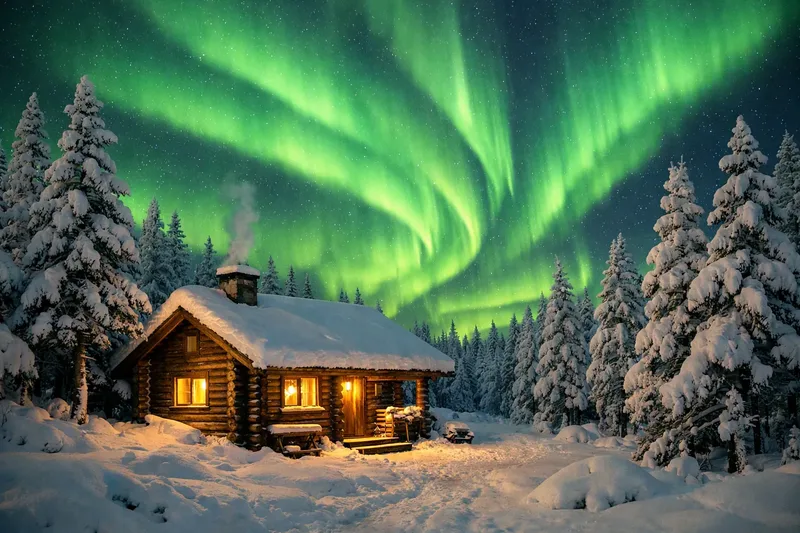
Key takeaways
- Lapland is the large northern part of Finland, much of it north of the Arctic Circle, and the homeland of the Sami people.
- The aurora depends on solar activity and on clear, dark skies; nobody can guarantee a sighting, so stay several nights and keep plans flexible.
- According to finland.fi the polar night lasts almost two months in Utsjoki and four days in Sodankylä, with blue twilight around midday.
- Cold, thin ice, snowmobile rules and animals on the road are the main winter risks; follow local official guidance.
- Reindeer are semi-domesticated and owned by herders, so give them space and do not feed them.
What and where is Lapland?
Lapland is the large northern part of Finland, much of it lying north of the Arctic Circle. The word covers both a historical province and a modern administrative region, and many travellers use it loosely for anything in the far north. It is a spacious land of forests, rounded fells, peat bogs, wide rivers and big lakes, with small communities scattered across long distances. Unlike alpine regions, the fells here are not jagged peaks but low, smooth hills, many of them treeless on top, and the character of the place comes from openness and quiet more than from height.
Lapland is also the homeland of the Sami people, an Indigenous people whose culture, languages and traditions, including reindeer herding, belong to this region. Visitors are encouraged to learn about Sami culture from Sami sources, to be respectful, and to ask before photographing people or entering places connected with their way of life.
Which landscape features should I know?
A few terms help when reading a map of the north. Tunturi means fell, a rounded upland, often above the tree line. Joki is a river, suo is a bog or mire, and kero or vaara may refer to a hill or ridge. Names can appear in several languages, since Finnish, Northern Sami, Inari Sami and Skolt Sami are all used in parts of the region, and bilingual or multilingual signs are common.
The vegetation shifts as you go north. Dense pine and spruce forest gives way to birch and then to open fell tops. Bogs can be wide and wet, and walking off marked paths in them is hard going. National parks and hiking areas provide waymarked routes and simple huts, and these are a sensible choice for anyone who is new to wilderness travel.
What are the northern lights?
The northern lights, or aurora borealis, are glowing light displays in the night sky caused by charged particles from the sun interacting with the upper atmosphere. They are seen most often in regions near the polar zones, which is why northern Finland is popular for watching them. The colours are most commonly green, sometimes with other tones, and the shapes range from faint glows to moving arcs and curtains.
It is important to be realistic. No one can promise a sighting. The aurora depends on solar activity, which varies, and on local conditions, especially clear skies and darkness. Cloud cover can hide the sky entirely, even on an otherwise active night. This guide does not predict when or where the aurora will appear, and you should be sceptical of any source that claims certainty. Visiting for several nights, staying flexible and treating the lights as a bonus rather than a guarantee is the most honest approach.
How do I watch for the aurora?
- Choose a dark place away from strong artificial lighting, since street lamps and buildings reduce visibility.
- Look for a clear view of the northern sky and a safe, well-known spot you can reach and leave easily.
- Dress warmly in layers, with insulated boots, a hat, and mittens, because standing still in the cold feels much colder than moving.
- Bring a warm drink and be patient, since displays can come and go.
- Check a local weather forecast for cloud cover, and consider public space weather information if you want to follow solar activity, remembering that it is only indicative.
If you want to photograph the lights, a camera that handles long exposures and a stable support are useful, but enjoying the sky with your own eyes is just as worthwhile.
What are the seasons like in the north?
The north has dramatic contrasts. In summer, the sun can stay above the horizon for long stretches near and beyond the Arctic Circle, a phenomenon often called the midnight sun. In deep winter, the sun can stay below or barely above the horizon for a period known as the polar night, although the sky is not completely dark, and a soft blue twilight often appears around midday. Our separate seasons guide explains these concepts in general terms.
Autumn brings vivid foliage in the fells, often called ruska in Finnish. Spring is a period of lengthening light and melting snow, and some trails and roads may be difficult while the ground thaws. Winter offers snow-covered landscapes, which suit skiing, snowshoeing and other activities, but it also requires careful preparation.
How do I stay safe in a Lapland winter?
Cold is the most serious factor in Lapland winters. Temperatures can fall low enough to cause frostbite and hypothermia, and the risk rises with wind, wet clothing and fatigue. Follow local official guidance, tell someone your plans, carry a charged phone and a means of staying warm, and avoid venturing alone into remote areas without experience. Wind chill increases the danger, so cover exposed skin.
Ice on lakes and rivers is not uniformly safe. Snow can hide thin spots, and currents weaken the ice in places. Never assume a frozen surface will hold you unless local authorities or operators say so. Snowmobiles and similar vehicles are subject to rules about routes and licences, and they should be used only on permitted tracks or with qualified guides.
Driving in winter requires proper tyres, a cautious speed and awareness of reindeer, which may wander onto roads, particularly at dusk and in poor visibility. Collisions with reindeer or elk are a real hazard, so reduce your speed in unfamiliar areas and watch the road edges.
Winter risks at a glance
| Risk | Where it shows up | What the guide advises |
|---|---|---|
| Cold and wind chill | Standing still outdoors, remote areas | Layers, cover exposed skin, tell someone your plans |
| Unsafe ice | Lakes and rivers hidden under snow | Only use ice marked safe by local authorities or operators |
| Snowmobiles | Off permitted routes | Use permitted tracks or qualified guides; check licence rules |
| Reindeer and elk | Roads at dusk and in poor visibility | Reduce speed and watch the road edges |
| Long darkness | The polar night in the far north | Plan activities for the lighter hours around midday |
How do I respect animals and people?
Reindeer are semi-domesticated and belong to herders, even when they walk freely. Do not feed or chase them, and give them space. Wild animals such as bears are present in the north, though sightings are uncommon. Follow local official advice on how to behave if you ever meet one, and never approach wildlife for a photograph.
How do I get there and move around?
Several towns in the north act as gateways, reached by domestic flights, long-distance trains and buses. Once there, distances can be large and public transport may be limited in remote areas, so many visitors rely on organised transfers, rental cars or tours. Check current routes with transport providers and plan extra time in winter.
A balanced way to plan
A good Lapland trip combines a base in or near a town with day activities and, if you like, a few nights in a more remote setting. Leave room in the schedule for weather. Do not count on one particular night for the lights, and remember that the quiet beauty of the landscape by day often becomes the memory that lasts. Always check entry requirements and safety guidance with official sources before travelling.
Sources and further reading
- finland.fi: When the sun doesn't rise in northern Finland: says the polar night lasts almost two months in Utsjoki and four days in Sodankylä, and that Helsinki's shortest day is under six hours.
Frequently asked questions
Can I be sure of seeing the northern lights?
No. Sightings depend on solar activity and on clear, dark skies, and nobody can guarantee them. Cloud can hide the sky entirely even on an active night. Staying several nights, choosing a dark place with a clear northern view and remaining flexible improves your chances without promising anything.
Is all of Lapland above the Arctic Circle?
No, but a large share lies north of the line. The term Lapland is used loosely for a historical province, a modern region and the far north in general, so check the exact location of any place you plan to visit. The Arctic Circle crosses the region, which allows midnight sun and polar night phenomena in the north.
How should I dress for a winter visit?
Use several warm layers, insulated boots, a hat, mittens and a windproof outer layer. Standing still while watching for the aurora feels much colder than moving, so bring extra layers and a warm drink. Cover exposed skin in wind, keep phones and cameras warm, and follow local advice on cold conditions.
Are reindeer wild animals?
Most reindeer in Finland are semi-domesticated and owned by herders, even when they walk freely. Give them space, do not feed or chase them, and watch for them on roads, especially at dusk and in poor visibility. Collisions with reindeer or elk are a real hazard, so reduce your speed in unfamiliar areas.